
Collector’s Guide to Understanding Card Value
It is one of the most common questions in the hobby: are these old cards worth anything?
The honest answer is: it depends entirely on what you have, and most people have no idea how to tell the difference between a collection worth thousands of dollars and a collection worth almost nothing. The gap between those two outcomes is real, and it is not always obvious from looking at the cards themselves.
This guide will walk you through how to assess your collection the right way, what actually drives card value, which eras and sets are worth your attention, and which ones are almost certainly not. No hype, no guessing. Just the framework collectors and buyers use to sort through exactly this question.
The Single Biggest Misconception About Card Value
Most people assume that old equals valuable. It does not, at least not automatically. And a lot of people assume that because a card features a famous player, it must be worth something. That is also not reliable on its own.
Card value is driven by four things, in roughly this order of importance: scarcity, condition, player, and demand. A card can feature Mickey Mantle and still be worth very little if it was printed in massive quantities and survives in poor condition. A card of a player most people have never heard of can be worth thousands if it comes from a scarce pre-war set and survives in high grade.
Understanding how these four factors interact is the foundation of everything else in this guide.
Era Matters More Than Most People Realize
The era in which cards were produced tells you a lot about their likely scarcity and demand. Here is a breakdown of the major eras and what they mean for value.
Pre-War Cards (Before 1941)
Pre-war cards are among the most sought-after in the entire hobby. They were produced in an era before television, before mass consumer culture, and in quantities that seem tiny by modern standards. Surviving examples in any condition are relatively scarce, and high-grade examples are genuinely rare.
The major pre-war sets include T206 (produced 1909 to 1911, the source of the famous Honus Wagner), T205, E90-1 American Caramel, the Goudey sets from the 1930s, and Play Ball from 1939 to 1941. These cards were distributed with tobacco products, caramel candies, and gum, and most did not survive in good condition.
If you have cards that look genuinely old, with rounded corners, yellowed stock, and a printed rather than photographic image quality, you may have pre-war material. These deserve serious attention before any selling decision. Even a worn, creased pre-war card of a journeyman player can be worth more than a pristine modern card of a superstar.
Vintage Post-War Cards (1948 to 1969)
The post-war vintage era produced some of the most iconic cards in the hobby. Bowman entered the market in 1948, followed by Topps in 1951. The 1952 Topps set is considered the most important set in the modern hobby, anchored by the Mickey Mantle card that has become a benchmark for the entire market.
Other significant sets from this era include 1948 Bowman baseball and basketball, 1957 and 1958 Topps football, and the early Topps baseball sets through the 1960s. Key rookie cards from this period, including Willie Mays, Hank Aaron, Sandy Koufax, and others, are highly collectible.
Condition is particularly important for post-war vintage. Cards from this era were handled by kids, rubber-banded together, and stored without any protective materials. High-grade examples are genuinely difficult to find, and the premium for condition is steep.
The Overproduction Era (1970 to 1985)
Card production expanded significantly through the 1970s and into the mid-1980s. Topps held a near-monopoly on the market for much of this period. Cards from this era are more common than pre-war or early post-war vintage, but key rookie cards still carry real value.
Notable cards from this era include the 1979 Topps Wayne Gretzky rookie, the 1969 Topps Reggie Jackson rookie, the 1980 Topps Larry Bird and Magic Johnson rookies, and the 1984 Topps Dan Marino and John Elway rookies. If your collection includes significant rookie cards from this era in solid condition, they are worth identifying and pricing carefully.
The Junk Wax Era (1986 to 1994)
This is where most people’s hopes get deflated, and for good reason.
Beginning in 1986, card companies responded to surging collector demand by dramatically increasing print runs. Donruss and Fleer entered the market alongside Topps. Score and Upper Deck followed. By the early 1990s, companies were printing cards in quantities measured in hundreds of millions. Collectors hoarded unopened boxes and complete sets as investments. Stores stocked cases of wax boxes.
The result was massive oversupply that permanently suppressed values. Most cards from 1986 through 1994 are worth fractions of a cent. Complete sets from this era that collectors stored carefully and never opened are still worth very little, because millions of identical sets exist in identical condition.
There are real exceptions. The 1986 Fleer Basketball set, anchored by the Michael Jordan rookie card, is legitimately valuable. The 1989 Upper Deck Ken Griffey Jr. rookie remains a key card. Specific rookie cards of players who went on to Hall of Fame careers can carry real premiums. But the base, the bulk of what most people have from this era, is worth very little regardless of how well it was stored.
If your collection is primarily cards from this era with no clear standout rookies or key players, manage your expectations before spending time trying to sell it.
The Modern Era (1994 to Present)
The modern hobby is built around scarcity manufactured at the production level. Autographed cards, numbered parallels, patch cards, and rookie cards printed in limited quantities are what drive value today. A base card of a current star might be worth nothing. A numbered parallel of the same player in the same set might be worth hundreds.
Modern collections require card-by-card assessment rather than era-level generalizations. A single graded rookie card of a current superstar can anchor an otherwise modest modern collection. The key is knowing what you have specifically, not generally.
The Four Drivers of Card Value
With the era context established, here is how to apply the four value drivers to what you have.
Scarcity
How many of this card exist? For pre-war cards, the answer is often measured in dozens or hundreds of surviving examples. For a 1991 Topps base card, the answer is tens of millions. Scarcity is the foundational driver, and it is set at the production level. You cannot change it, but you can understand it.
For modern cards, numbered parallels tell you exactly how many were produced. A card numbered 15 out of 25 is more scarce than a card numbered 87 out of 250. The lower the print run, the higher the ceiling on value.
Condition
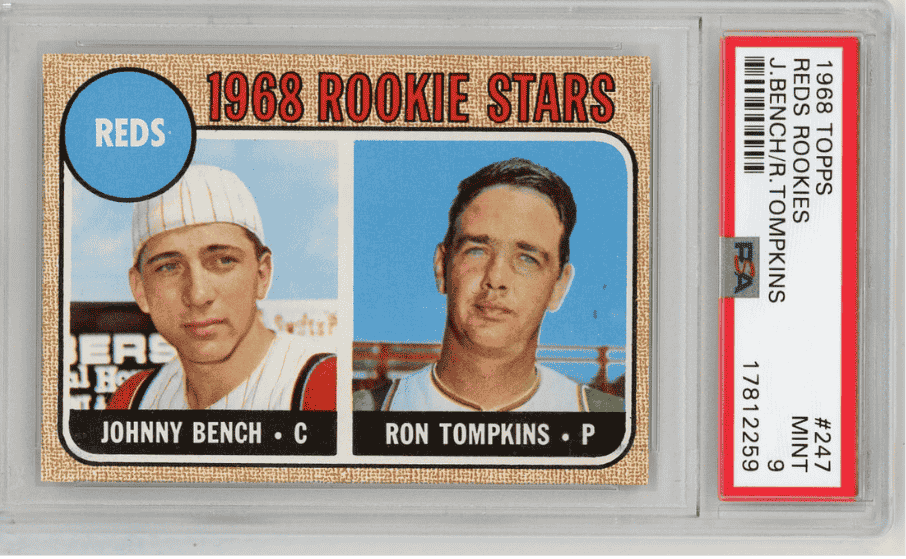
Condition is the variable that separates a good card from a great one within the same level of scarcity. The grading scale runs from Poor (1) to Gem Mint (10), with PSA, BGS, and SGC as the major grading companies.
For vintage cards, condition dramatically affects price. The difference between a PSA 5 and a PSA 8 on a significant card can be a factor of ten or more in realized value. For junk wax era cards where millions survive in high grade, condition matters less because even PSA 10 examples are not scarce.
Assess condition by looking at four things: corners (sharp or soft?), edges (clean or nicked?), surface (clean or scratched and stained?), and centering (is the image centered between the borders?). Be realistic. Wishful grading is the most common reason sellers are disappointed by offers.
Player
Hall of Famers, key historical figures, and current superstars drive demand. A rookie card of a player who never made it carries little demand regardless of condition or scarcity. A rookie card of a first-ballot Hall of Famer in high grade is a benchmark card for the hobby.
For pre-war material, player identification requires some research. Players who were significant in their era may not be household names today, but still carry collector demand. Babe Ruth, Ty Cobb, Christy Mathewson, and Walter Johnson are obvious examples. Beyond the obvious names, regional stars and early Black baseball players are increasingly sought after by advanced collectors.
Demand
Demand fluctuates with the hobby market and with broader culture. A player who wins a championship sees card values spike. A player involved in controversy sees them drop. The overall market for vintage cards has trended upward significantly over the past decade, driven by growing collector interest and investment activity in the hobby.
Demand is the hardest factor to predict and the least useful for a casual seller to try to time. Focus on what you have and what it is worth today rather than trying to wait for the perfect market moment.
How to Look Up What Your Cards Are Actually Worth
You do not need a professional appraisal to get a working sense of your collection’s value. Here is how to do it yourself.
Use eBay sold listings, not asking prices
Go to eBay, search for the specific card you want to price (player name, year, card number or set name, and condition or grade), then filter by Sold Listings. This shows you what buyers actually paid in the last 90 days, which is the closest thing to real market data available to you without industry access.
Do not anchor on the highest sale you find. Look at the range and the average. One outlier sale does not represent the market. If you see five sales of the same card in similar condition ranging from $40 to $60, that card is worth approximately $40 to $60. If one of those sales was $200, something unusual happened in that transaction.
Compare apples to apples
Condition matters when looking at comps. A PSA 9 sale does not tell you what a raw card in average condition is worth. A graded sale does not tell you what an ungraded card brings. Find comps in the same format and similar condition to what you have.
Check PWCC and Heritage for vintage
For pre-war and early vintage cards, PWCC Marketplace auction results and Heritage Auctions’ archive are better sources than eBay. They attract serious vintage collectors and institutional buyers, and their results reflect the upper end of what the market will bear for significant material.
Beckett is a reference, not a price
Beckett book value is widely referenced but should not be mistaken for what your cards will sell for. Beckett prices reflect a kind of aspirational retail ceiling. Real transactions, particularly cash transactions with dealers, happen well below Beckett value. Use Beckett to understand relative value between cards, not to set expectations for what you will receive.
Quick Reference: What Is Worth Your Time
To summarize what we have covered, here is a practical breakdown.
Almost certainly worth investigating
- Any cards produced before 1941
- Topps baseball cards from 1952 through 1969
- Bowman baseball and basketball cards from 1948 through 1955
- Key rookie cards from the 1970s and early 1980s (Gretzky, Bird, Magic, Marino, Elway)
- The 1986 Fleer Basketball set, especially the Michael Jordan rookie
- The 1989 Upper Deck Ken Griffey Jr. rookie
- Any professionally graded card with a PSA, BGS, or SGC grade of 7 or higher on a recognizable player
- Any sealed, unopened wax boxes or cases from any era
Probably worth very little
- Base cards from 1986 through 1994 of non-Hall of Fame players
- Complete sets from the junk wax era stored in original boxes
- Cards in poor condition with heavy creasing, writing, or water damage from any era
- Modern base cards of current players with no serial numbering or autograph
Requires card-by-card assessment
- Modern numbered parallels, autographed cards, or patch cards
- Cards from the 1970s that may or may not be key rookies
- Mixed collections spanning multiple eras
When to Talk to a Buyer
Once you have done your basic research, you have a reasonable sense of whether your collection warrants a conversation with a buyer. If your research suggests you have genuine vintage material, key rookie cards from any era, sealed product, or graded cards in strong grades, it is worth reaching out to a buyer who specializes in what you have.
Come prepared with photographs of the key pieces, a rough sense of what you found in your research, and realistic expectations about the difference between retail value and what a dealer will offer. A buyer who explains their offer clearly and is willing to answer your questions is the right buyer to work with.
If your research suggests your collection is primarily junk wax era base cards, that is useful information too. It saves you time and sets accurate expectations before you invest more effort in the process.
Final Thoughts
Most people who ask whether their cards are worth anything are hoping the answer is yes. Sometimes it is, significantly so. Sometimes it is not. The honest answer requires actually looking at what you have with a clear framework, not wishful thinking.
The good news is that the tools to do basic research are free and accessible. eBay sold listings will tell you more in 30 minutes than most people learn from years of guessing. And if you have material worth selling, finding a buyer who knows what they are looking at will always produce a better outcome than rushing into a sale without understanding what you have.
At Hometown Sports Fan, we buy vintage sports cards, pre-war baseball cards, sealed product, large collections, and dealer lots. If you have gone through this guide and think you may have something worth talking about, reach out. We are happy to help you understand what you have before any decision is made.